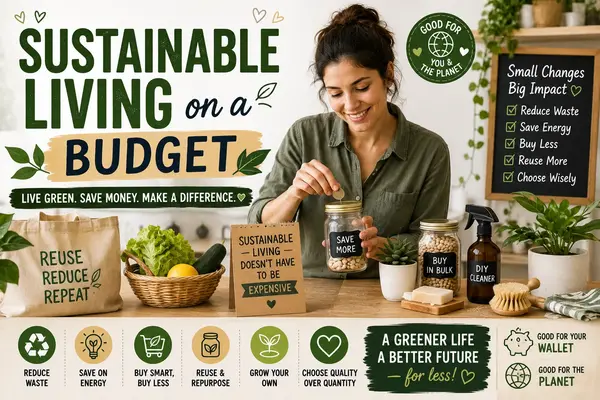
You want to live sustainably but believe it demands a bigger paycheck. Organic groceries, solar panels, and zero-waste starter kits drain your bank account fast. Here is the truth most people miss — sustainable living on a budget actually puts money back in your pocket. These 25 practical strategies prove that going green and saving cash go hand in hand.
What Does Sustainable Living on a Budget Actually Mean?
Sustainable living on a budget means making daily choices that protect the planet while protecting your wallet. You reduce waste, consume less energy, and buy only what you truly need.
This approach strips away the myth that eco-friendly lifestyles require expensive gadgets or premium organic brands. The core idea stays simple: use fewer resources, spend less money, and create less trash.
The U.S. Environmental Protection Agency (EPA) confirms that household waste reduction directly lowers monthly expenses for the average American family (epa.gov). You do not need a six-figure income to start. You need intention and a few smart habit shifts.
Why Does Sustainable Living on a Budget Save You Money Long-Term?
Most people assume green products cost more. The opposite holds true when you zoom out beyond the price tag.
Buying in bulk, repairing instead of replacing, and cutting energy waste all shrink your monthly bills. The U.S. Department of Energy reports that simple home efficiency upgrades save households an average of $200 to $400 per year on utility costs (energy.gov).
Sustainable living on a budget works because it attacks the root of overspending — mindless consumption. When you buy less, you save more. When you waste less, you spend less. The math is that straightforward.
How Can You Reduce Energy Costs at Home Sustainably?
Energy bills eat up a huge chunk of household budgets. Cutting them helps both your bank account and the environment.
- Switch to LED bulbs. They use 75% less energy than incandescent bulbs and last 25 times longer.
- Unplug idle electronics. Devices on standby still pull power. A smart power strip solves this instantly.
- Seal windows and doors. Drafty gaps force your heater and AC to work overtime. Weatherstripping costs under $20 and pays for itself within weeks.
- Wash clothes in cold water. Heating water accounts for roughly 90% of the energy your washing machine uses.
- Air-dry laundry when possible. Skip the dryer entirely during warm months.
Each of these steps costs almost nothing upfront. Together, they slash your energy bill by 15% to 30% within the first year.
What Are the Best Budget-Friendly Sustainable Food Habits?
Food waste costs the average American household over $1,500 per year, according to the U.S. Department of Agriculture (usda.gov). Fixing this single problem transforms your grocery budget.
- Plan meals weekly. Write a list before you shop and stick to it. Impulse buys create waste.
- Buy seasonal produce. Strawberries in December cost triple the price and travel thousands of miles. Local, in-season food tastes better and costs less.
- Cook in batches. Preparing large portions on Sunday eliminates the temptation to order takeout on Wednesday.
- Grow herbs on your windowsill. Basil, mint, and cilantro thrive in small pots and save you $3 to $5 per bunch at the store.
- Start composting kitchen scraps. Composting reduces landfill waste and creates free fertilizer for any plants you grow.
These habits make sustainable living on a budget feel effortless at mealtime.
How Do You Build a Zero-Waste Kitchen Without Overspending?
Zero-waste kitchens sound expensive until you realize most of the “products” are things you already own.
Glass jars from pasta sauce become food storage containers. Old t-shirts turn into reusable cleaning rags. Beeswax wraps replace plastic cling film and last for months with proper care.
Stop buying single-use paper towels. A pack of microfiber cloths costs $10 and replaces hundreds of paper towel rolls over its lifetime.
Shop at bulk bins with your own containers. Stores like Whole Foods and local co-ops let you fill jars with rice, beans, oats, and spices at lower per-pound prices than packaged versions.
Which Sustainable Transportation Options Cost the Least?
Cars drain budgets through fuel, insurance, maintenance, and depreciation. Rethinking how you move around town saves thousands annually.
- For travels less than two miles, walk or ride a bike. This costs nothing and doubles as daily exercise.
- Use public transit. Monthly bus or train passes cost a fraction of car ownership expenses.
- Carpool with coworkers. Splitting gas and parking fees cuts your commute costs in half.
- Combine errands into one trip. Fewer drives mean less fuel burned and less time wasted.
You do not need an electric vehicle to practice sustainable living on a budget. Your own two feet work perfectly fine for short distances.
How Can You Shop Sustainably on a Tight Budget?
Fast fashion and disposable goods create enormous environmental damage. They also trap you in a cycle of constant repurchasing.
- Thrift first. Goodwill, Salvation Army, and local consignment shops offer quality clothing at 80% to 90% off retail prices.
- Host clothing swaps. Invite friends to trade gently worn items. Everyone walks away with something “new” for free.
- Buy secondhand furniture. Facebook Marketplace and Craigslist list solid wood pieces for a fraction of big-box store prices.
- Choose quality over quantity. One well-made pair of boots outlasts five cheap pairs and costs less over five years.
- Repair before replacing. A $10 shoe resole extends the life of footwear you already own and love.
Brands like Patagonia also offer repair and resale programs through their Worn Wear initiative, proving that durability and sustainability go together.
What Are the Cheapest Ways to Conserve Water at Home?
Water bills creep up silently. Small leaks and inefficient habits waste thousands of gallons per year.
- Fix dripping faucets immediately. A single drip wastes over 3,000 gallons annually.
- Install low-flow showerheads. These cost $15 to $30 and reduce water usage by 40% without sacrificing pressure.
- Run dishwashers and washing machines only when full. Half-loads waste water and electricity equally.
- Collect rainwater for gardening. A simple barrel setup costs under $50 and keeps your plants hydrated for free during summer.
Water conservation is one of the fastest wins for sustainable living on a budget.
How Do You Make Your Wardrobe Sustainable for Less?
The fashion industry produces 10% of global carbon emissions. Your closet choices carry real environmental weight.
Build a capsule wardrobe around 25 to 35 versatile pieces that mix and match easily. This eliminates the “nothing to wear” panic that drives impulse purchases.
Wash clothes less frequently. Jeans and sweaters do not need washing after every wear. Overwashing fades fabrics and shortens their lifespan.
When you do shop, check fabric labels. Natural fibers like cotton, linen, and wool break down safely in the environment. Synthetic fabrics like polyester shed microplastics into waterways with every wash cycle.
Can Sustainable Living on a Budget Improve Your Health?
Green habits and personal health overlap more than most people realize.
Walking and biking replace sedentary car rides with cardiovascular exercise. Cooking at home with whole ingredients reduces sodium, sugar, and preservative intake compared to processed convenience meals.
Switching to natural cleaning products like vinegar and baking soda removes harsh chemical fumes from your indoor air. Your lungs notice the difference within days.
Practicing sustainable living on a budget quietly upgrades your physical health while shrinking your environmental footprint.
What Are the Biggest Myths About Affordable Green Living?
Several stubborn myths keep people from trying eco-friendly habits. Let’s dismantle them.
Myth 1: “Green products always cost more.”
Reality: Reusable items cost more upfront but save hundreds over their lifetime. A $20 stainless steel water bottle replaces $300 worth of plastic bottles in two years.
Myth 2: “You need solar panels to live sustainably.”
Reality: Turning off lights, reducing meat consumption, and buying secondhand create massive environmental impact with zero installation costs.
Myth 3: “One person cannot make a difference.”
Reality: If every American household eliminated food waste, it would save 38 million tons of greenhouse gas emissions annually, per EPA data.
Myth 4: “Sustainable living requires a complete lifestyle overhaul.”
Reality: Start with one change this week. Add another next month. Small steps compound into enormous results.
How Do You Start Sustainable Living on a Budget This Week?
Action beats planning every time. Here is your seven-day starter plan.
- Day 1: Audit your trash. Identify the three items you throw away most often and find reusable replacements.
- Day 2: Unplug every device not in active use.
- Day 3: Cook one meal entirely from ingredients already in your pantry.
- Day 4: Walk or bike to one destination you would normally drive to.
- Day 5: Visit a thrift store instead of a mall.
- Day 6: Start a small compost bin with a countertop container.
- Day 7: Calculate how much money you saved this week through these changes alone.
This single week of sustainable living on a budget builds momentum that carries forward for months.
Sustainable Living on a Budget: Cost Comparison Table
| Expense Category | Traditional Monthly Cost | Sustainable Monthly Cost | Monthly Savings |
| Energy (electricity & gas) | $180 | $130 | $50 |
| Groceries (with meal planning) | $600 | $450 | $150 |
| Transportation (fuel & parking) | $250 | $80 | $170 |
| Clothing & accessories | $150 | $30 | $120 |
| Household cleaning supplies | $40 | $10 | $30 |
| Water bill | $70 | $50 | $20 |
| Total | $1,290 | $750 | $540 |
This table shows why sustainable living on a budget is not a sacrifice. It is a financial upgrade.
Frequently Asked Questions
1. What is the easiest way to start sustainable living on a budget?
Begin by eliminating single-use plastics. Carry a reusable water bottle, bring cloth bags to the grocery store, and refuse plastic straws. These three changes cost under $15 total and create immediate environmental impact.
2. Does sustainable living on a budget really save money?
Yes. Reducing consumption, cutting energy waste, and buying secondhand lower your monthly expenses by hundreds of dollars. The EPA confirms that waste reduction directly decreases household spending.
3. Can I practice sustainable living on a budget in a small apartment?
Absolutely. Compost with a small countertop bin, grow herbs on a windowsill, air-dry clothes on a folding rack, and shop at nearby farmers markets. Apartment living actually encourages minimalism, which is the foundation of affordable sustainability.
4. What are the best free sustainable habits?
Turn off lights when leaving rooms, take shorter showers, walk instead of driving short distances, and repair items instead of discarding them. None of these habits cost a single dollar.
5. How does sustainable living on a budget help the environment?
Every dollar you redirect away from disposable goods reduces landfill waste, lowers carbon emissions, and conserves natural resources. Small household changes multiply across millions of homes to create measurable global impact.
6. Is sustainable living on a budget possible for families with children?
Yes. Buy children’s clothing from consignment shops, pack zero-waste school lunches in reusable containers, and teach kids to turn off faucets while brushing teeth. Families actually save the most because their consumption volume is higher.
Take Your First Step Toward Greener, Cheaper Living Today
Sustainable living on a budget is not a distant goal reserved for wealthy environmentalists. It is a practical, money-saving approach available to anyone willing to make small, consistent changes.