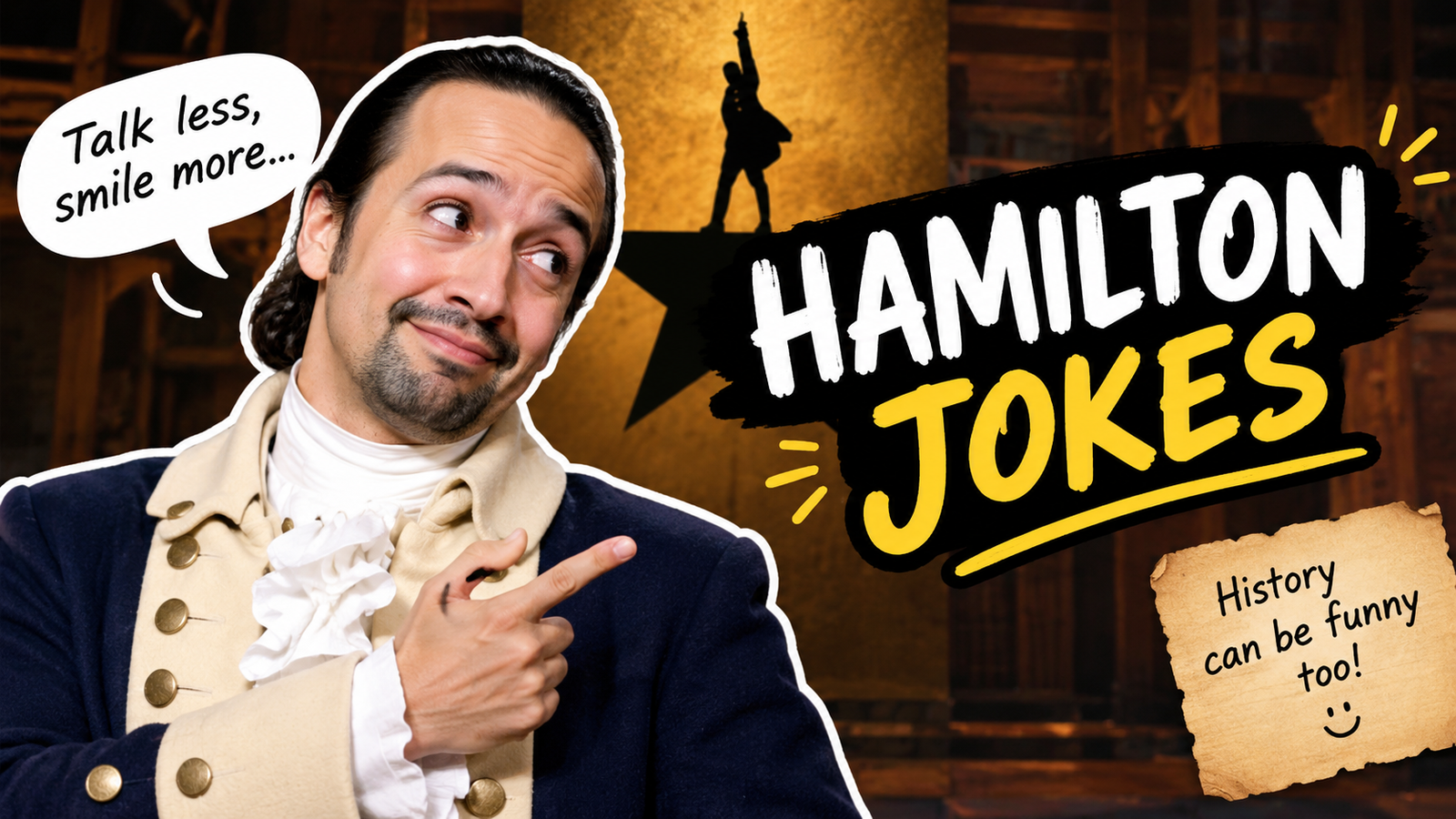
If you enjoy clever humor, historical references, and jokes that mix pop culture with real events, Hamilton jokes can be surprisingly entertaining. The name Hamilton can refer to several things, including the famous historical figure Alexander Hamilton, the hit musical Hamilton, or even people, places, and everyday situations connected to the name. That gives joke writers plenty of material to work with.
What makes Hamilton-related humor interesting is the combination of history and modern comedy. Alexander Hamilton lived more than two centuries ago, yet his story has become familiar to a much younger audience through theater, music, social media, and popular culture. That contrast creates plenty of opportunities for playful jokes.
Whether you are a fan of the musical, interested in American history, or simply looking for clean and clever jokes, Hamilton humor offers something different. Here are some entertaining ideas and examples that explore why these jokes work and how people use them.
What Are Hamilton Jokes?
Hamilton jokes are humorous comments, wordplay, memes, or one-liners connected to the name Hamilton. In many cases, the jokes reference Alexander Hamilton, his historical reputation, or the musical Hamilton. Some jokes also play with common words associated with the character and story.
A good Hamilton joke does not always require deep historical knowledge. Sometimes the humor comes from simple wordplay. Other times, the joke becomes funnier when the reader understands a reference to the musical, American history, or one of the show’s memorable characters.
The best examples usually combine something familiar with an unexpected punchline. That makes Hamilton a useful subject for comedy because there are so many historical and cultural details that can be turned into lighthearted observations.
Funny Hamilton Jokes About Alexander Hamilton
Alexander Hamilton is an especially interesting figure for jokes because his life included politics, military service, writing, financial work, and plenty of historical drama. His unusually busy life gives comedians a lot of material.
One simple joke might ask why Hamilton was always writing. The answer could be, “Because apparently he never believed in saving anything for later.” The joke plays on his reputation as a prolific writer while keeping the humor harmless.
Another playful line could be: “Hamilton did not believe in wasting time. He apparently wanted to be in the room where every decision happened.” This works because it connects a modern expression with the famous themes associated with the musical.
Here are a few more light Hamilton jokes:
- Why did Hamilton carry a notebook everywhere? Because he was always ready to make history.
- Hamilton’s favorite activity? Writing things down before anyone else could.
- Why was Hamilton good at debates? He always had another paragraph ready.
- Hamilton walked into a room and immediately started taking notes.
- Why did Hamilton love paperwork? Because he considered it part of the revolution.
Hamilton Jokes Inspired by the Musical
The musical Hamilton introduced Alexander Hamilton’s story to millions of people through a combination of hip-hop, traditional musical theater, historical storytelling, and memorable performances. Naturally, the show itself became a source of jokes and memes.
Fans often create humor around the musical’s songs, characters, and recurring themes. Some jokes focus on the speed of the lyrics, while others reference the dramatic relationships between the characters.
One common type of joke involves someone trying to memorize the lyrics. A person might say, “I started learning the songs from Hamilton and accidentally turned my grocery list into a rap.” It is a simple joke, but many fans can relate to it.
Another example is: “I tried to explain Hamilton to my friend in five minutes. Three hours later, we were still talking about the soundtrack.” That captures the enthusiasm many fans have for the production.
Hamilton Puns and Wordplay
Wordplay is one of the easiest ways to create Hamilton jokes. The name itself can be used in phrases involving speed, history, money, politics, or famous expressions.
For example, someone might joke, “Hamilton never had a slow day. He was always running at full historical speed.” Another could be, “My history homework mentioned Hamilton, so naturally I expected a musical number.”
These jokes do not necessarily need to reference specific scenes or songs. Instead, they use the general cultural recognition of Hamilton to create a humorous situation.
Wordplay works particularly well when the joke is short. A clever sentence can be more effective than a long explanation because the reader gets the connection immediately.
Clean Hamilton Jokes for Friends
Clean Hamilton jokes are useful for conversations, school discussions, social posts, and family-friendly entertainment. They can make references to history without becoming complicated or inappropriate.
For example, you could ask, “What was Hamilton’s favorite kind of music?” The answer might be, “Anything with a strong historical beat.” It is intentionally simple, but that is part of the appeal.
Another clean joke is: “My history teacher asked me to remember Hamilton. I said, ‘Don’t worry, I won’t throw away my shot.’” This works because it combines a familiar phrase associated with the musical with an ordinary classroom situation.
A few additional clean examples include:
- Hamilton joined the group chat and immediately started writing.
- I asked Hamilton for financial advice. He said, “Let’s talk about the treasury.”
- Hamilton’s calendar was always full because he had history to make.
- My friend loves Hamilton so much that every argument becomes a musical debate.
- Hamilton never needed a reminder. He was already taking notes.
Hamilton Jokes for History Fans
History fans often enjoy jokes that contain a little more context. Historical humor can be especially satisfying because the punchline may depend on recognizing an actual event, person, or idea.
Hamilton’s involvement in the American founding period gives comedians plenty of opportunities. His work with the government, his role in the Revolutionary War, and his political writing all provide recognizable subjects.
For example, someone could joke, “Hamilton’s idea of a casual conversation was probably a 20-page political essay.” This exaggerates his reputation for writing while keeping the joke friendly.
Another humorous observation might be: “If Hamilton had lived in the age of smartphones, his screen-time report would probably have been replaced by a word-count report.” The joke imagines a historical figure in a modern environment.
Hamilton Jokes About Money
Money is another natural subject for Hamilton humor because Alexander Hamilton played an important role in the early financial system of the United States. His name is also famously associated with the ten-dollar bill.
A simple joke could be: “Why does Hamilton look so serious on the ten-dollar bill? Because he knows where you spent the other nine dollars.” This uses the familiar image of Hamilton on currency for a modern financial joke.
Another example is: “I found Hamilton in my wallet. He was the only person there who looked financially responsible.” It turns a historical portrait into a relatable joke about money.
You could also say, “Hamilton and my bank account have one thing in common: both have complicated histories.” That type of humor works because it connects history with an everyday financial experience.
Hamilton Jokes for Social Media
Short Hamilton jokes can work well on social media because people often prefer quick humor that can be understood immediately. A clever one-liner can become a caption, comment, or meme.
For example, “My weekend plans? Rise up, get coffee, and try to accomplish something.” This uses the general spirit of the musical without copying its lyrics.
Another social-media-style joke could be: “Me opening my history textbook: I am not throwing away my afternoon.” It transforms a familiar Hamilton reference into an everyday complaint.
Social media humor also allows people to combine Hamilton references with current trends. A historical character can be placed into modern situations involving phones, work, school, dating, shopping, or online conversations.
Why Hamilton Jokes Are So Popular
Hamilton jokes remain popular because the subject exists at the intersection of history and entertainment. People who know the historical story can enjoy one layer of the joke, while musical fans may recognize an additional reference.
The musical also made historical figures more familiar to younger audiences. Instead of encountering Hamilton only in textbooks, many people encountered him through songs, performances, memes, and online discussions.
That wider cultural presence makes Hamilton an easy subject for humor. A joke can reference history, theater, music, politics, money, or everyday life while still connecting back to the same recognizable name.
How to Create Your Own Hamilton Jokes
Creating Hamilton jokes does not have to be difficult. Start with something strongly associated with Hamilton, such as writing, money, history, politics, or the musical. Then connect that subject to an ordinary modern situation.
For example, take the idea of Hamilton being a prolific writer. Put it into a modern situation: “Hamilton would have the longest email signature in history.” The humor comes from imagining his historical personality in today’s world.
You can also use simple question-and-answer formats. Ask a question about Hamilton and then give an unexpected answer. The key is to keep the setup easy to understand and make the punchline arrive quickly.
Another useful technique is exaggeration. Take a recognizable trait and make it absurdly large. If Hamilton was known for writing, imagine him writing the terms and conditions for a coffee purchase. The exaggeration creates the comedic effect.
Hamilton Jokes That Work for Kids and Families
Family-friendly humor can introduce children to historical figures without making history feel boring. Simple jokes about writing, money, school, and historical adventures are usually easy for younger audiences to understand.
For example: “Why did Hamilton bring a pencil to the revolution? Because he was prepared to write history.” It is a basic joke, but it connects humor with a historical idea.
Another example is: “What did Hamilton say when his homework was finished? Finally, I have achieved something without writing another essay.” This turns the idea of Hamilton’s writing into a school-related joke.
These jokes can be especially useful in classrooms or family settings because they encourage curiosity. A child who laughs at a Hamilton joke may become interested enough to ask who Hamilton actually was.
The Difference Between Good and Bad Hamilton Jokes
A good Hamilton joke usually has a clear setup and a punchline that feels natural. It does not require the reader to understand an extremely obscure historical detail unless the joke is specifically intended for history enthusiasts.
A bad joke may explain itself too much. If the writer has to explain why the punchline is funny, the humor often loses its impact. Keeping the wording short and the connection obvious usually produces better results.
Good Hamilton humor should also avoid inventing serious historical claims just to make a joke. Comedy can exaggerate, but it should be clear when something is fictional or playful.
Final Thoughts on Hamilton Jokes
Hamilton jokes are a fun way to combine history, theater, music, wordplay, and everyday humor. Alexander Hamilton’s unusual life and the popularity of the musical give writers plenty of material for creative jokes.
The strongest jokes are often simple. A reference to writing, money, history, or musical theater can become funny when it is placed into an unexpected modern situation. That makes Hamilton humor accessible to both dedicated fans and casual readers.
Whether you are looking for a quick joke to share with friends, a clean classroom-friendly line, or inspiration for creating your own memes, Hamilton provides plenty of possibilities. His story may belong to history, but the jokes inspired by it continue to find new audiences.